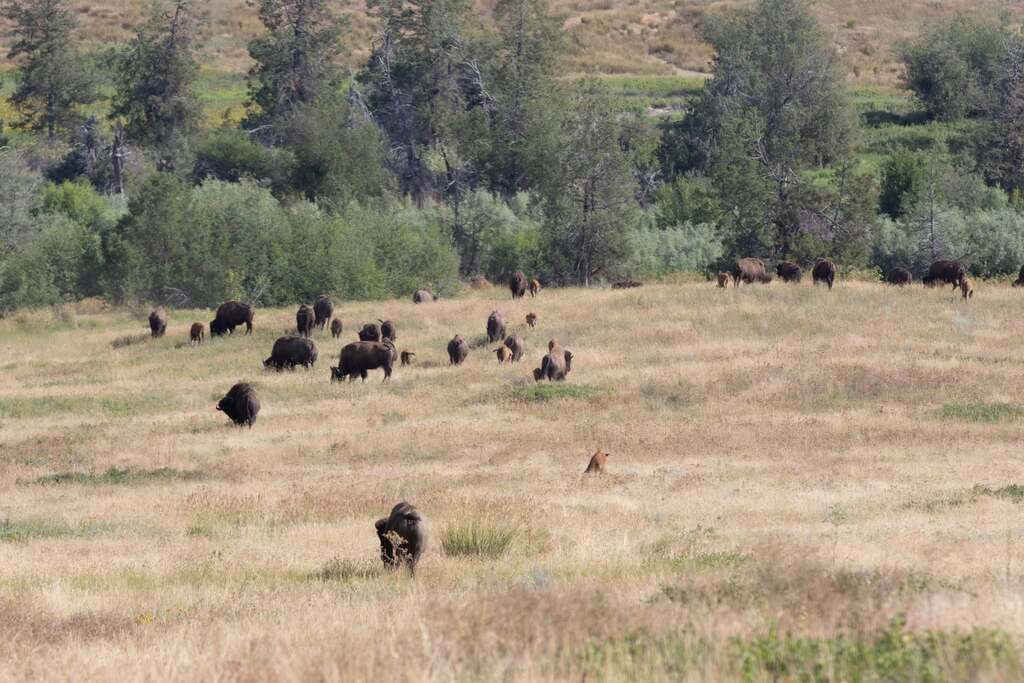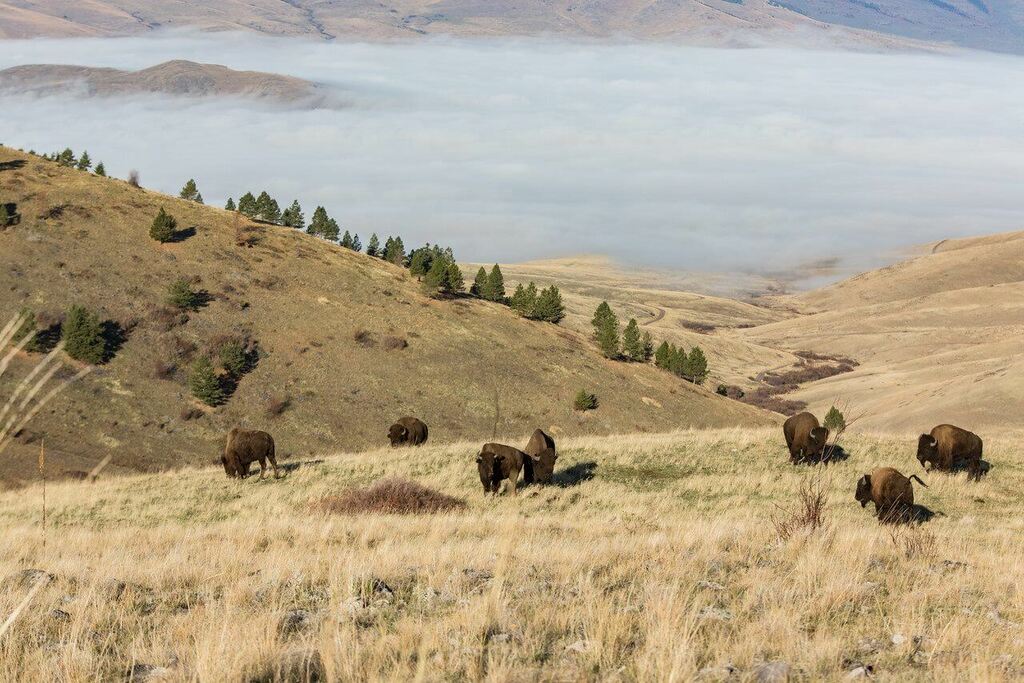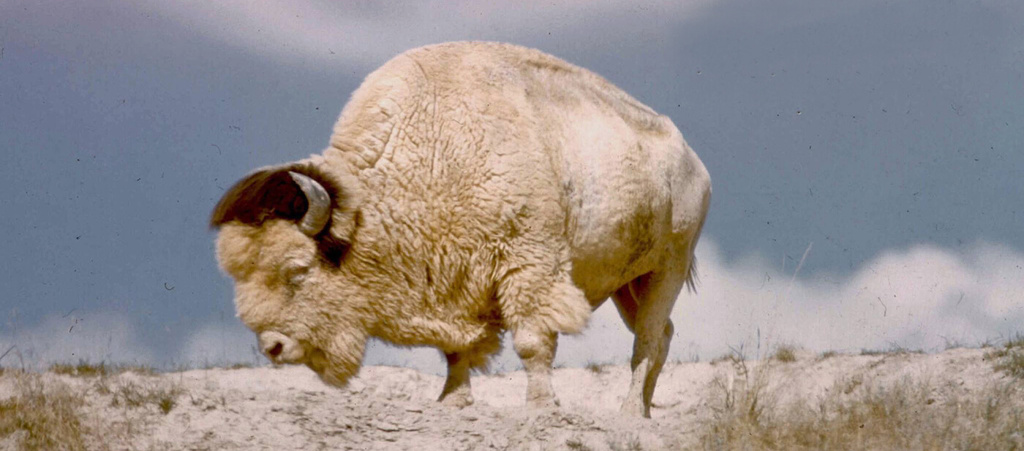

The CSKT Bison Range is a wildlife refuge in western Montana, home to about 350 bison and other animals. In the late 1800s, Tribal members of the Confederated Salish and Kootenai Tribes (CSKT) helped save bison by starting their herd. In 1908, the U.S. government took 18,500 acres of Tribal land without consent to create the National Bison Range. The federal government managed it for over 100 years, while the CSKT fought to regain control. In 2020, it was included in the Montana Water Rights Protection Act, and by 2022, the land was officially restored to the CSKT.
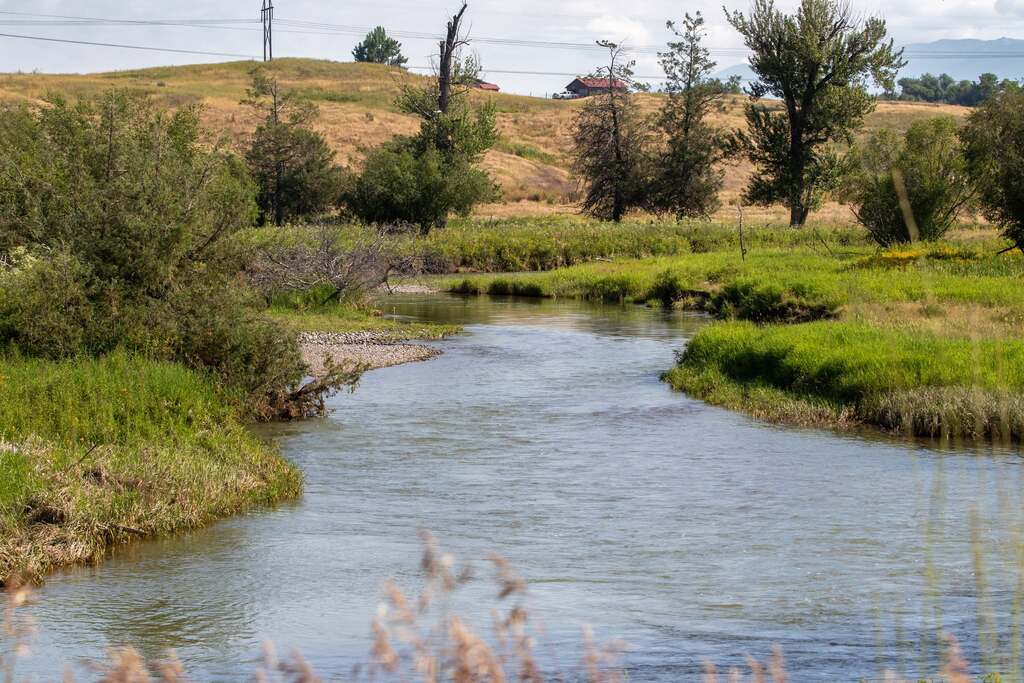
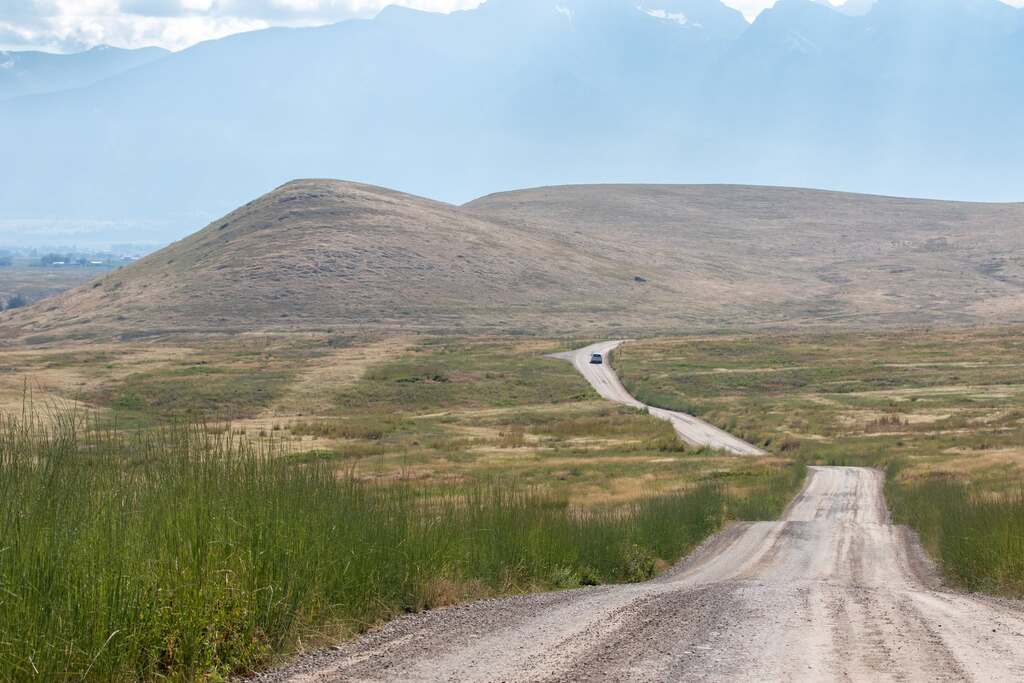
The Bison Range is a self-directed driving tour with two scenic drives. The primary drive is Red Sleep Drive, a 2-hour, 19-mile loop that goes up and over Red Sleep Mountain. It is only open during the summer (May to October) and has two walking trails. Visitors can enjoy seeing scenic views of the valley as well as possibly spotting bears, birds and other interesting species. The second drive is Prairie Drive, which is the lower half of the Red Sleep Drive loop and is open all year. This is a 14-mile drive that goes out to a turnaround area and comes back to the entrance. Prairie Drive goes along the scenic Mission Creek and is usually the best place to spot bison, elk, deer and pronghorn.
OUR HISTORY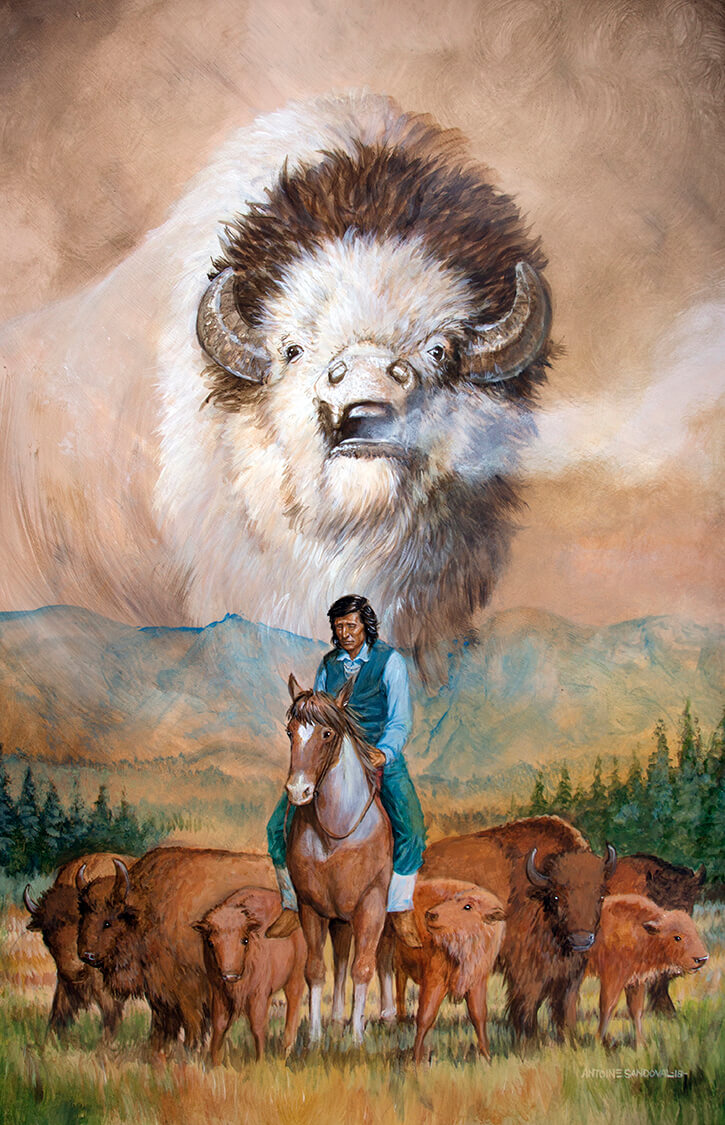
In the 1870’s
When mass slaughter put the plains bison on the brink of extinction, a Ql̓ispé (also known as Kalispel or Pend d’Oreille) man named Little Falcon Robe received approval from leaders of the Tribes to bring orphaned bison calves across the Continental Divide to the Flathead Indian Reservation for purposes of starting a herd for subsistence and conservation purposes.
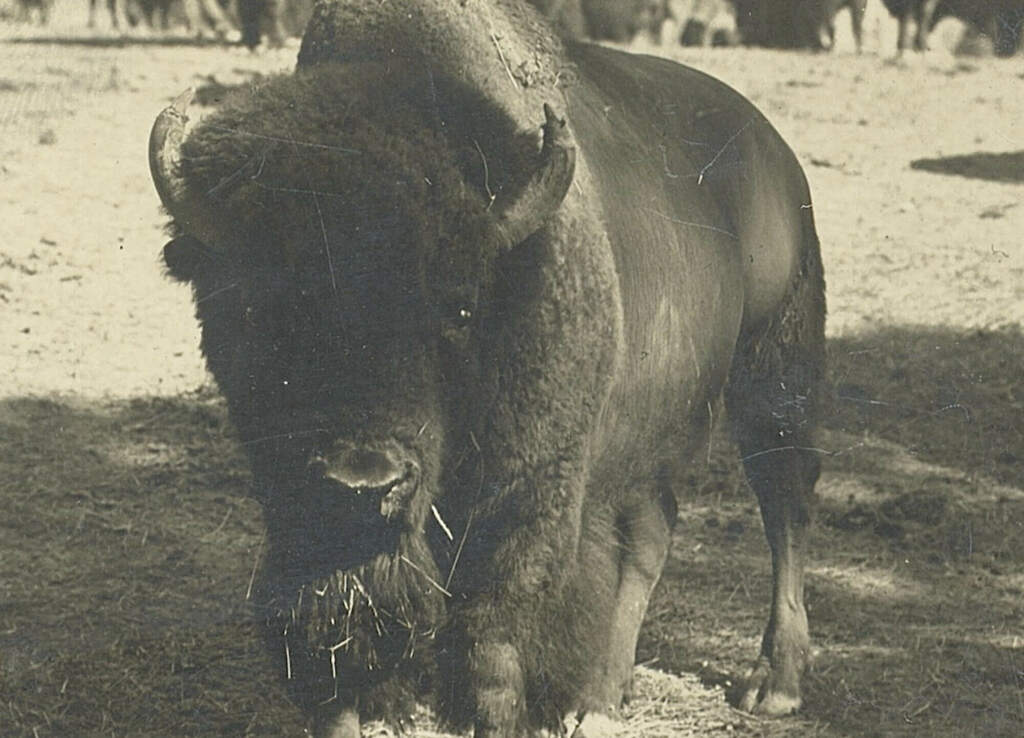
Those few bison calves grew into a large free-ranging herd under the stewardship of Tribal members, who later included Michel Pablo and Charles Allard. This herd became the largest herd of plains bison in the world by the end of the 1800’s. After Charles Allard died in 1896, his estate sold his share of the Pablo-Allard herd, some of which went to the Conrad Ranch in Kalispell, Montana in the early 1900’s.
The Pablo-Allard herd ranged freely on the Reservation for decades before they were sold to off-Reservation interests in the early 1900’s due to the opening of the Reservation, over strong objection from the Tribes, for non-Indian settlement.
Eighteen bison from the Pablo-Allard herd went to Yellowstone National Park to augment its dwindling bison herd, which had consisted of an estimated 22 animals by 1902. The rest of the herd were sold to private ranches and the Canadian government.
In the Hellgate Treaty of 1855, the United States promised that the Flathead Reservation would forever be the Tribes’ permanent homeland. In exchange, the Tribes agreed to relinquish millions of acres of their aboriginal territory. The Tribes lived up to their promise but sadly, the United States did not.
In 1908-1909, despite strong objection from the Tribes, the United States unlawfully took the land from the Tribes for the Bison Range, previously called the National Bison Range. The United States paid an estimated $1.56 per acre. In 1971, the U.S. Court of Claims held that this purchase was below the fair market value of the time and therefore unconstitutional under the Fifth Amendment. They awarded the CSKT around $231,548 in compensation (approximately $14 per acre, based upon the 1912 fair market value rate). However, tribal members have for generations believed that no amount of money could compensate them for removal of the Bison Range from their permanent homeland.
After the Bison Range was established in 1908, the federal government needed to obtain animals for its initial bison population. This history is recounted in a short documentary film called “In the Spirit of Atatíc̓e: The Untold Story of the National Bison Range”, available for viewing below:
The Tribes’ Natural Resources Department has extensive experience in wildlife and natural resources management,
including the establishment and management of the country’s first tribally-designated wilderness area (the 91,000 acre Mission Mountains Tribal Wilderness), as well as special management districts for large animals (Little Money Bighorn Sheep Special Management District, Ferry Basin Elk Special Management District) and the restoration and management of bighorn sheep populations, peregrine falcons and trumpeter swans on the Reservation.
From 1994 through 2016, CSKT engaged in extensive and repeated efforts towards entering into partnership agreements with the U.S. Fish & Wildlife Service to participate in managing the Bison Range. These contracts were authorized by the Tribal Self-Governance Act and two such agreements were in effect from 2005-2006 and 2008-2010.