Buffalo Thunder Resort Casino — Santa Fe, New Mexico
Now in its 27th year, the American Indian Alaska Native Tourism Association’s (AIANTA) American Indigenous Tourism Conference (AITC) attracts more than 300 attendees who participate for second-to-none networking opportunities, high-level keynote sessions, and informative breakout sessions led by some of the hospitality industry’s leading experts. Attendees include Indigenous entrepreneurs, artists, tour operators, cultural and museum professionals, historic preservation officers, and representatives from the travel and tourism industry, as well as educational institutions and federal, state, and local agencies.
The AITC is hosted annually on the Indigenous homelands of various Native Nations and communities in the United States. The signature event will be held this year on the tribal homelands of the Mississippi Band of Choctaw Indians, from October 27 to 30, at Pearl River Resort in Choctaw, Mississippi, and organized by AIANTA.
Since the first AITC in 1999 in Albuquerque, NM, AIANTA has ensured that the event is hosted on the homelands of Indigenous tribes, organizations, enterprises, hotels, or casinos. AIANTA, the only national organization dedicated to advancing Indigenous tourism in Native Nations and communities across the United States, believes that Indigenous communities can utilize arts and cultural tourism to develop tourism plans and grow economic development.
Native Nations are not only preserving culture but also creatively integrating it with modern enterprises to support sustainable tourism. Native Nations and communities across the United States are redefining the role of casinos — not just as economic engines, but as powerful platforms for cultural expression and education. From the redwood-lined rivers of Northern California to the desert valleys of Arizona, Indigenous communities are weaving traditional arts, history, and storytelling into the visitor experience. Whether through curated art collections, immersive cultural programs, or landscape-inspired architecture, these resorts are becoming gateways into the rich and diverse cultures of Native Nations. As more tribes look to expand tourism opportunities, these examples highlight how integrating heritage with hospitality creates deeper connections — and lasting impressions — for travelers. The following are examples of properties successfully incorporating cultural tourism into their tourism planning.
Akwesasne Mohawk Casino Resort — Akwesasne Nation, New York
Sitting on the border of the United States and Canada in northern New York, the Akwesasne Mohawk Nation seeks to share its history and culture with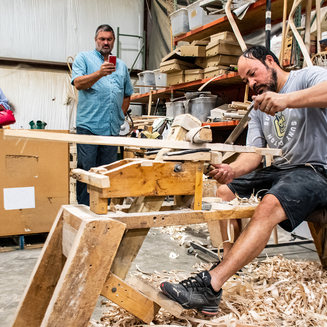 visitors as part of the tribe’s cultural tourism plan. While visitors already know the Akwesasne Mohawk Casino Resort and the annual international powwow, the tribe believes cultural tourism can be further showcased through its citizens’ artwork and a new tribal heritage complex.
Located along New York Highway 37, the St. Regis Mohawk Reservation is in a prime location for tourism. Thousands of people visit the casino annually, as well as another 6,000-7,000 people who attend the annual powwow. Believing they can leverage those visitors into longer stays or increased room nights, Akwesasne leaders started an initiative in 2008 called Sharing the Spirit, which eventually led to the Akwesasne Cultural Tourism Strategic Action Plan (ACTSAP).
After years of polishing ideas, the tribe finalized the ACTSAP in 2014, which led to the formation of a community working group. Each person manages a piece of the cultural tourism action plan, which was funded through a grant by the Administration for Native Americans (ANA).
Tulalip Resort Casino — Tulalip Tribe, Washington
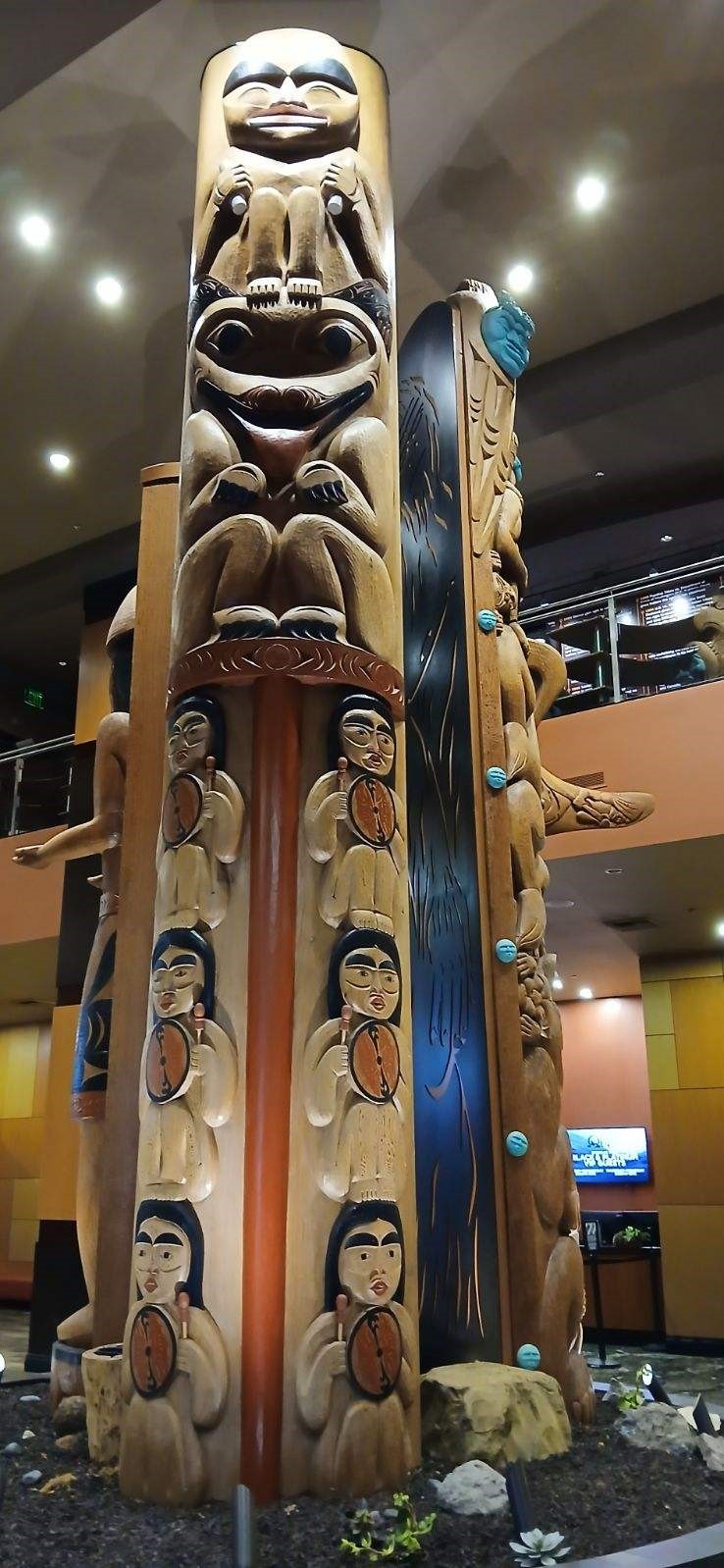 Tulalip Resort Casino in Washington is a shining example of how a tribe can seamlessly integrate tribal art into its resort. This luxury destination is also a living gallery, honoring and preserving the rich cultural heritage of the art from its members and neighboring tribes. From the moment guests arrive, they are welcomed by a striking waterfall and a series of landscaped ponds featuring monumental sculptures — an orca whale breaching from the water and a bronze Tulalip spear fisherman—showing their connections to land, sea and ancestral traditions.
James Madison, a Tulalip master carver and sculptor of Snohomish, Tlingit, and Coast Salish heritage, created a striking 24-foot story pole that anchors the hotel lobby. Outside the resort’s entrance, Salish artist Joe Gobin crafted a welcoming totem. The resort also highlights the work of artists from neighboring tribes: Phil Gray, a Tsimshian and Mikisew Cree artist, is celebrated for his intricate wood carvings; Colville artist Joe Feddersen contributes bold mixed-media pieces; and Tlingit artist Preston Singletary reimagines traditional stories through the modern medium of glass, and more.
Buffalo Thunder — Pojoaque Pueblo, New Mexico
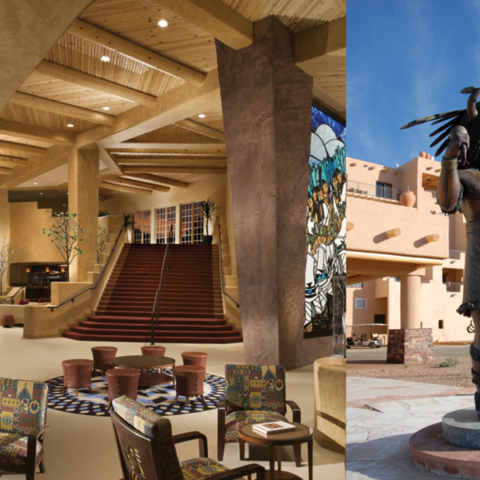
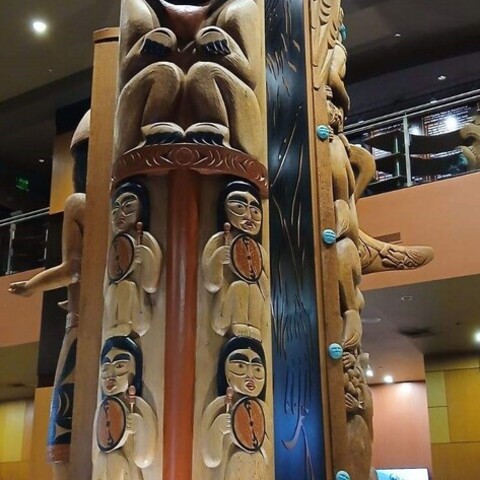
Buffalo Thunder at Pojoaque Pueblo in New Mexico is more than a destination, it’s an art museum showcasing its members art, as well as art from neighboring Pueblos. Home to the impressive $2 million Buffalo Thunder Collection of Art, the resort showcases hundreds of distinctive works—including sculptures, paintings, pottery, mosaics and architectural details. From the moment you arrive, you’re welcomed by a towering bronze sculpture of a buffalo dancer, a powerful work by former Pojoaque Governor and artist George Rivera. Every room offers hand-designed furnishings and work by local artists. The collection is curated by the nearby Poeh Cultural Center, which serves as the Native American Art and Culture center for the tribe; a walking guide to the art is also available, inviting guests to connect with the art that reflects the vibrant, living cultures of the Pueblos in the Southwest.
Redwood Hotel and Casino — Yurok Tribe, California
In Yurok country, everything is so big, it’s not difficult to picture yourself in the center of the world. Ancient redwood giants point to the sky with great round trunks of unimaginable diameters. And in silent solidarity they remain, standing with their original caretakers, the Yurok people. The lushness of this landscape is fed by the massive waters of the Klamath River, just before it empties into the sea, the culmination of a journey that feeds 5.6 million acres of river basin on its way home to the Pacific Ocean, passing through Yurok country at the finish line. And the Yurok people, like the land they steward, are doing big things. With the completion of the Redwood Hotel and Casino in Klamath, the Yurok Tribe immediately set plans in motion to increase tourism opportunities for adventurers looking for an outdoor experience not found anywhere else on earth. With a laser focus on improving ecological tourism, they have built a unique cultural education piece into their strategy, one that centers the voices of the Yurok people and the land itself. In 2014, after the opening of the hotel and casino, they built the Yurok Country Visitor Center, an informational hub offering travelers an opportunity to discover the Yurok Scenic Byways—five tribally designated roads within Yurok ancestral territory. They then purchased the Klamath Jet Boat Tours and adjacent RV Park in 2015, touting a 50-mile guided trip up the river where guests are treated to local wildlife sightings and a bit of adventure right on the Klamath River.
Talking Stick Resort — Salt River Pima Maricopa Indian Community, Arizona
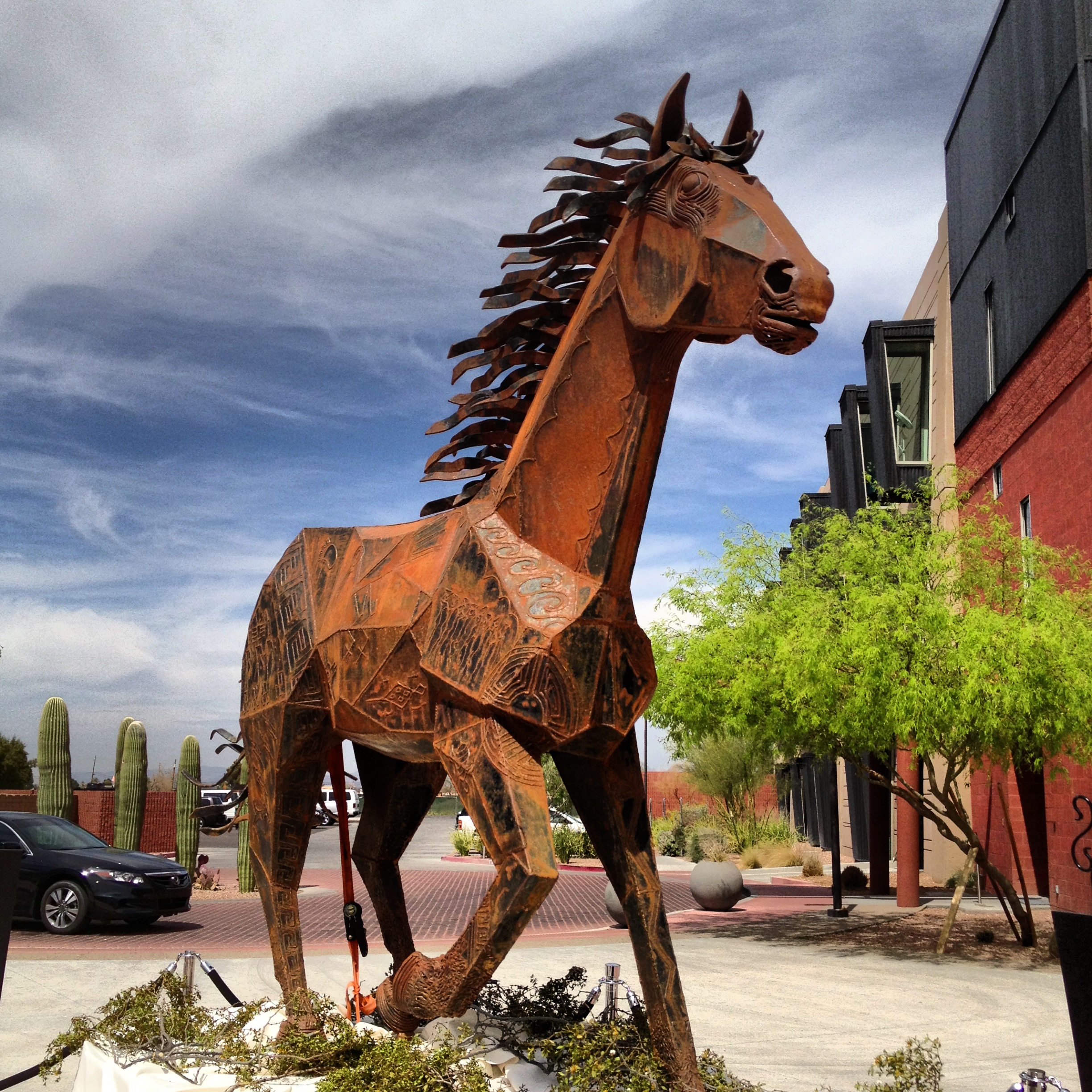 The four diamond Talking Stick Resort, owned and operated by the Salt River Pima-Maricopa Indian Community, is an iconic Scottsdale, AZ getaway. The luxury high-rise casino is so popular with spring break and spring training travelers, it might be easy to miss the resort’s cultural elements at first glance. But Talking Stick Resort is one part of the 12-stop, self-guided Salt River Art Trail. Throughout the resort are priceless pieces of Native American art, with much of it concentrated in the on-site Cultural Center, located in the resort lobby. The resort collection is recognized as the largest Native American art collection outside of a museum. The Salt River Art Trail also includes art exploration at 11 other sites, including the Salt River Fields at Talking Stick, Roadhouse Cinemas and other area hotels.
Coeur d’Alene Casino Resort — Coeur d’Alene Tribe, Idaho
Coeur d’Alene Casino Resort Cultural Tourism, Coeur d’Alene Tribe Rather than allowing partner organizations to speak on its behalf, the award-winning Coeur d’Alene Casino Resort controls its own messaging through its internal Cultural Tourism Department. Guests can sign up for scheduled programs that explore the cultural heritage of the Coeur d’Alene Tribe and neighboring Nez Perce Tribe. Previous programs have included painting classes with local artisans, moccasin making using Pendleton materials and an evening of tribal culture with traditional foods, storytelling, dance and drums. The Cultural Tourism Department also creates customized cultural programs for groups, which include additional resort and casino incentives such as complimentary airport transportation and a charter boat cruise on Coeur d’Alene Lake with a minimum four-night stay.
Leveraging Existing Casino Infrastructure to Support Cultural Heritage and Tourism
Advancing cultural heritage in tandem with your enterprise starts with community. As you begin to envision, implement or enhance your tourism program, consider establishing a committee. Bringing together representatives from various tribal departments and programs, including your hotel and/or casino, your tribal marketing and communications, Tribal Historic Preservation Office, the Economic Development team, and more. Tourism affects every tribal
department, so it is beneficial to bring together a diverse group of people to input ideas on how to carefully and sustainably develop tourism. Meeting monthly as a committee to discuss ongoing and future tourism offerings will only enhance your tourism program and team.
This article was written by AIT and published in the 2025 Summer issue of the Tribal Gaming and Hospitality magazine.


 of Kingman, Az. You can park your RV at the

 the menu is a celebration of the Alaskan wilderness. The reinvention of traditional Alaskan dishes with a modern twist is a pleasant surprise, while the chefs highlight the purity and richness of the ingredients.

 g is done sustainably and responsibly.


 ies. Visitors can get a more accurate and respectful depiction of the complexities of Native identities and narratives, even in a fictional story. A good book written by a Native voice informs thoughtful tourists and reminds them that Native storytelling is still a vibrant part of living culture.

 We Are Still Here! Native American Truths Everyone Should Know by Traci Sorell (Cherokee Nation) published by Charlesbridge Press, 2021. The title says it all for this award-winning book.
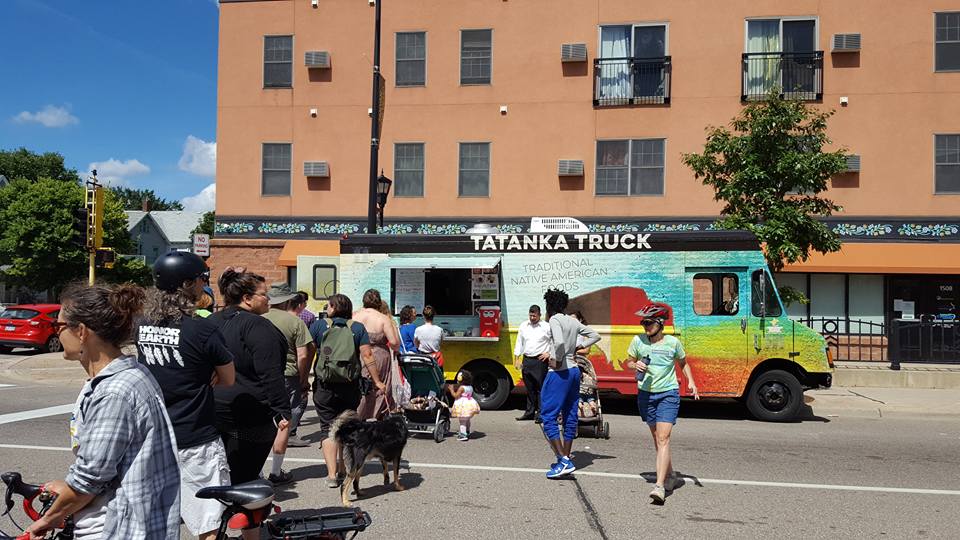

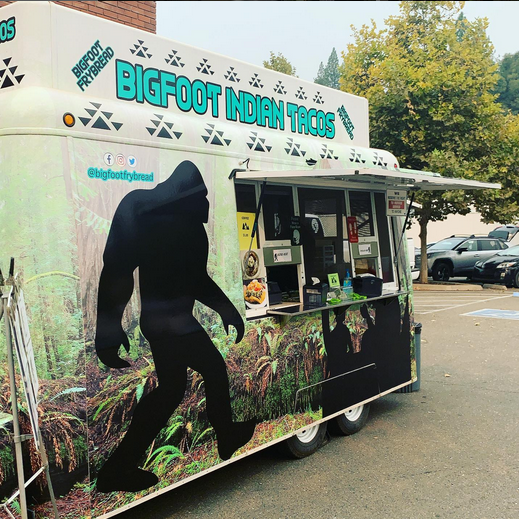
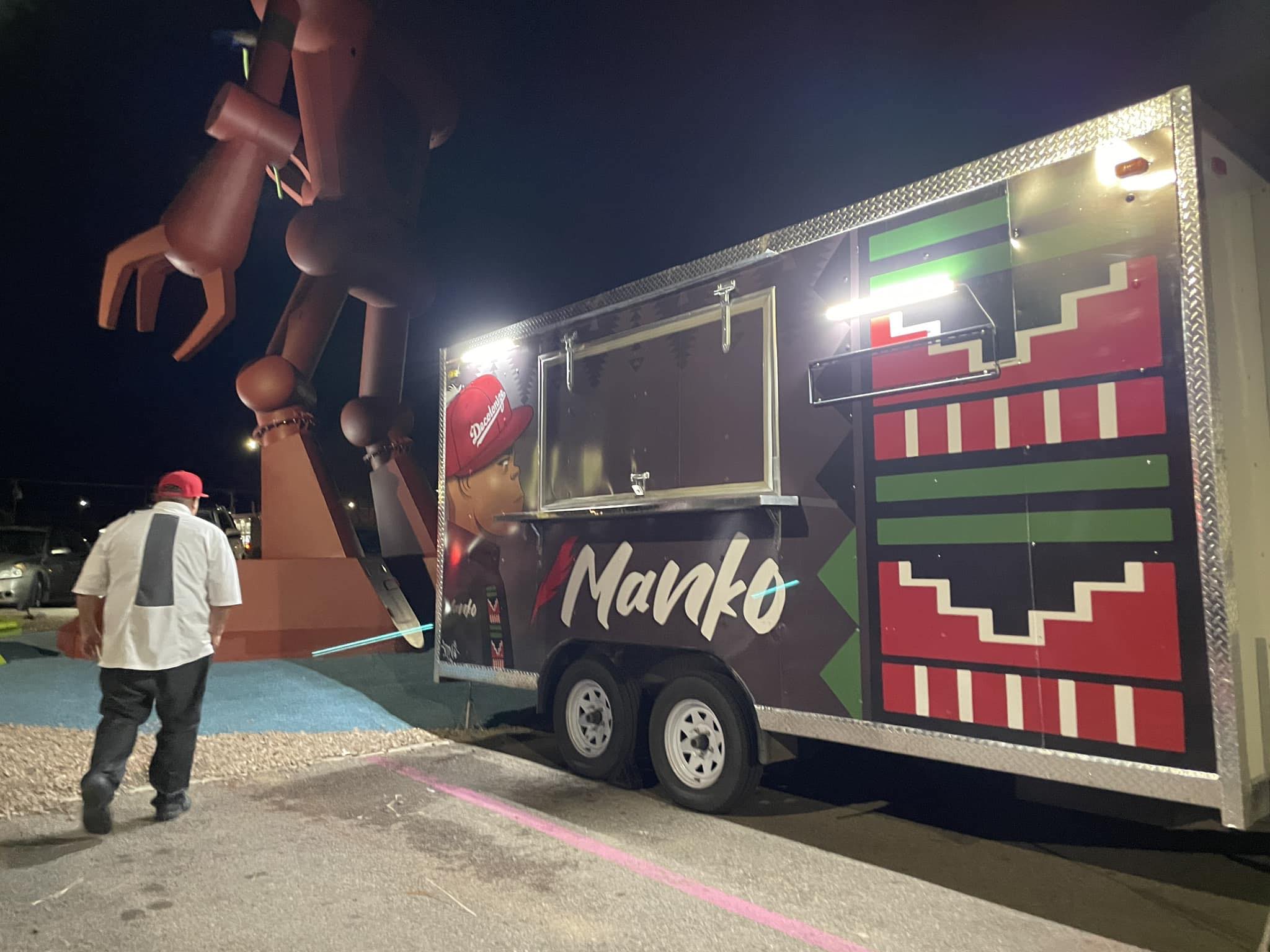
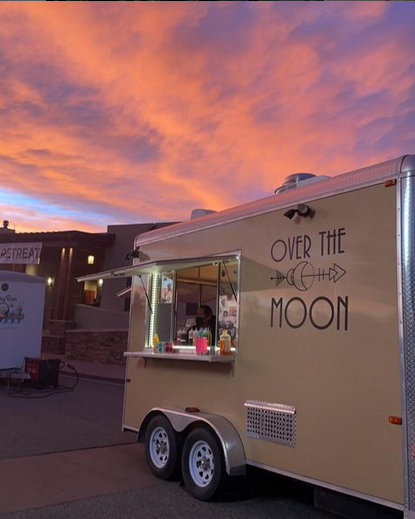
 -Fry-Bread Food Truck. There are so many variations and flavors and new choices added too. Find them on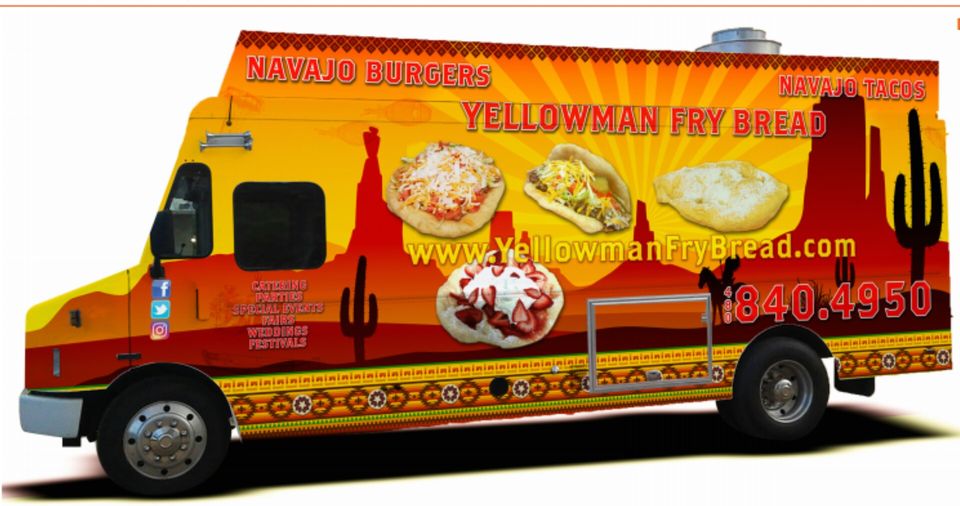




 Grandma Genevieve, who we called Grandma Jennie, had the best cheeks in town. Her high cheekbones gave way to the soft, smooth flesh of her cheeks. As she smiled (which was always), her cheeks would raise her glasses up, making her countenance all the happier. My little sister wrote a poem about her cheeks one time, referring to them as apples. Many of her grandchildren inherited those signature squishy cheeks. Thank you Grandma. That’s not the only thing she passed down though. She left us a legacy of love that can best be displayed by the sharing of meals and traditions that will live on as long as we, her children and grandchildren, continue to carry them.
 A Tlingit woman, coming from a matrilineal society, my Grandma was matriarch to her large family. With nine children and dozens of grandchildren and great grandchildren, she lovingly tended to anyone who made the time to visit her. In my eyes, Grandma possessed the art of turning nothing into something. She could multiply the little she had by sharing. On any given Saturday that meant dipping into her crock of sourdough starter to make her famous, plate-sized sourdough pancakes and hosting one grandkid at a time at her tiny table. News traveled fast at the mention of her coveted potato donuts and family appeared out of the woodworks to her door to enjoy them hot and fresh. The love she poured into feeding her family was just one extension of Grandma’s sweet and tender heart.
 words were taken from her. Her customs, ceremonies, and rituals that she knew, all taken from her. She was left with nothing.


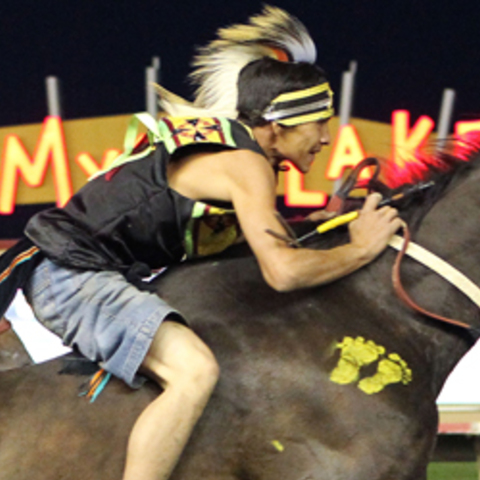
 As one of America’s oldest-known sporting competitions, Indian Relay is exploding in popularity, receiving long past-due recognition as one of the world’s most exciting extreme sports. Indian Relay dates back more than 400 years to when the horse was first re-introduced to the native cultures of the Americas. This exciting extreme sport is currently experiencing a surge in popularity, with tribal nations throughout Washington, Oregon, Idaho, Montana, South Dakota and beyond hosting relay teams in competitive events around the country.