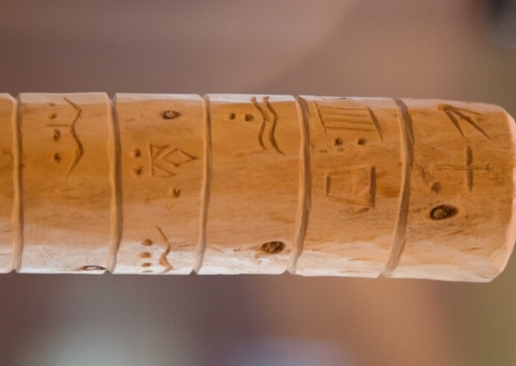

The Salt River Art Trail is a self-guided public art experience highlighting the creativity, history and cultural perspectives of artists from the Salt River Pima-Maricopa Indian Community (SRPMIC). Rather than following one continuous walking path, the Art Trail connects a series of sculptures, murals, photography installations and other artworks located throughout the Community and the nearby Talking Stick Entertainment District.
The trail provides an opportunity to experience contemporary Native American art in everyday community, business and entertainment settings. Artwork by Salt River Community member artists including Jeffrey Fulwilder, Anthony Collins, Dwayne Manuel and Jacob Butler incorporates imagery connected to O'odham and Piipaash history, landscapes, stories, plants, animals and relationships with water and the land.
ART TRAIL EXPERIENCE
The Salt River Art Trail is designed to be explored at visitors' own pace. The participating locations are spread across the Salt River area, so visitors generally travel by car between stops rather than walking the entire trail.
Art can be found at:
Discover Salt River Visitor Center
Pima Center
Rancho Solano School
Arizona Boardwalk at Talking Stick
Salt River Fields at Talking Stick
Two Waters
Casino Arizona
Other participating businesses and locations throughout the Talking Stick area
The exact collection of participating stops can change, so visitors should use the current official Art Trail map when planning their route.
 FEATURED ARTWORK
Pima Center
Several works by artist Jeffrey Fulwilder are located at the Pima Center near Loop 101 and Via de Ventura.
Basket Dancers depicts four female figures balancing baskets and honors women who continue traditional dances.
Flute Players features towering male figures etched with symbols representing culture, nature and the people.
Gourd Men portrays five traditional singers with long, flowing hair in a stylized interpretation of Pima warriors.
Rancho Solano School
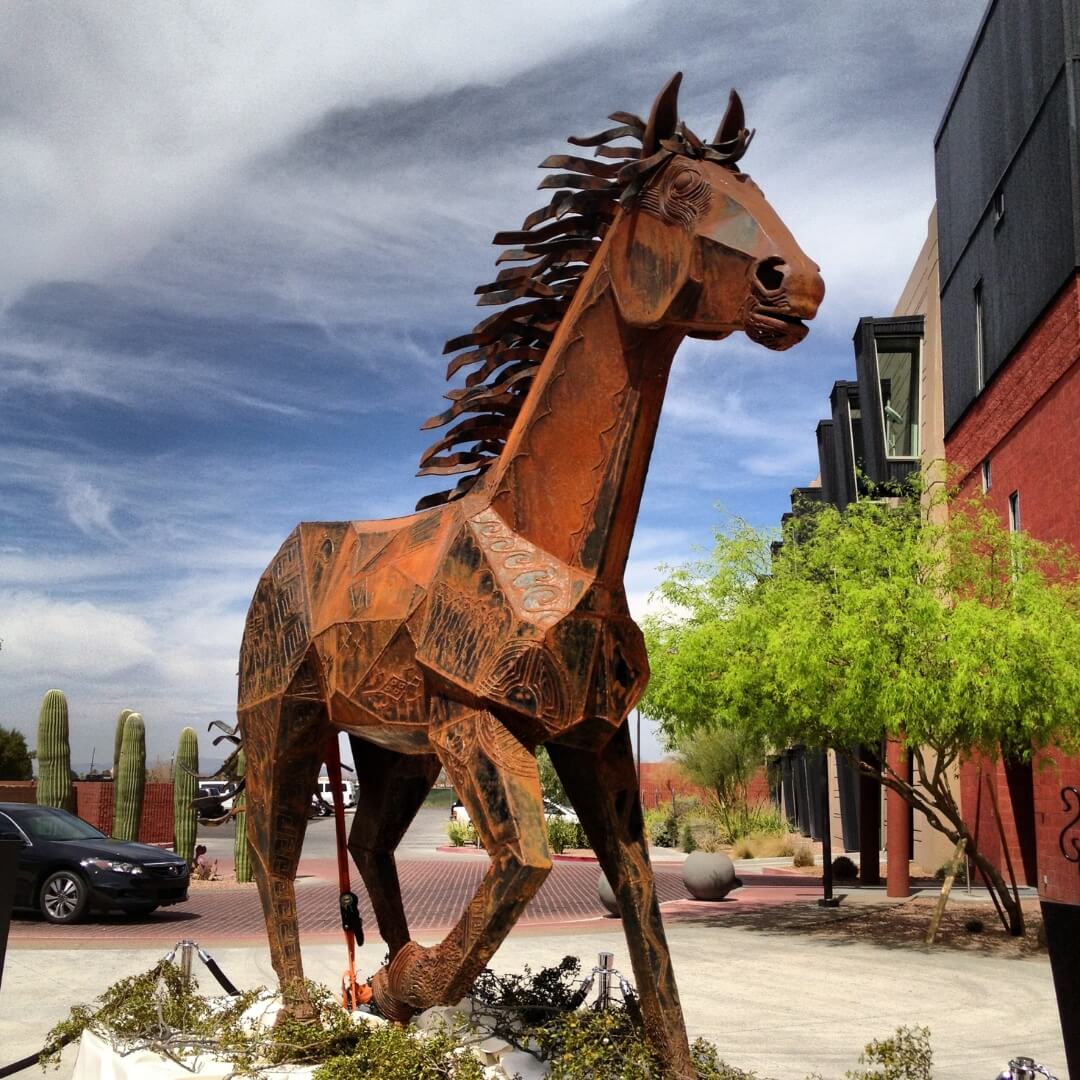
The Horse Called Creation, also by Jeffrey Fulwilder, is a life-size mustang sculpture covered with petroglyph-inspired designs. The imagery uses the horse as a canvas for stories and symbols.
Arizona Boardwalk at Talking Stick
Artist Jacob Butler created a series of exterior works representing rivers and landscapes significant to the region.
The installation includes imagery associated with:
Salt River: Reflecting the Community's connection with the river and broader water systems.
Gila River: Incorporating butterfly imagery connected with O'odham creation stories and Piipaash identity.
Santa Cruz River: Depicting a traditional farmer alongside the waters that have sustained Native communities.
Colorado River: Incorporating playful representations of fish historically found in the river system.
Verde River: Featuring Red Mountain, an important place within the Community's landscape and cultural life.
Two Waters
The Two Waters location near the Huhugam Ki: Museum features additional works by Jeffrey Fulwilder.
Highlights include:
Pima Baskets, featuring four traditional Huhugam design baskets
Wall Light Sconces, incorporating interpretations of water, gourd and coyote-track designs
Waiting for the Fruit to Ripen, a Sonoran Desert-inspired sculpture incorporating ocotillo, prickly pear and ancient pottery imagery
DISCOVER SALT RIVER VISITOR CENTER
The Discover Salt River Visitor Center serves as an information stop for visitors exploring the Community and also features artwork by Salt River Community member artists. It provides an appropriate starting point for visitors who want information about the Art Trail and other destinations in the Community.
ARTISTS & CONTEMPORAY NATIVE ART
The Salt River Art Trail emphasizes the work of artists connected directly to the Salt River Pima-Maricopa Indian Community. Their work demonstrates how contemporary Native artists can incorporate traditional imagery, community stories and connections to the Sonoran Desert into sculpture, photography, painting and other visual media.
The trail includes work by artists such as:
Jeffrey Fulwilder
Anthony Collins
Dwayne Manuel
Jacob Butler
Their work ranges from large-scale sculptures and architectural installations to photography and contemporary interpretations of traditional designs.
The result is an art experience where visitors encounter Indigenous artwork not only in a gallery but also alongside businesses, roads, entertainment venues and other parts of the Community.
FREE MOBILE ART TRAIL PASSPORT
The Salt River Art Trail offers a free mobile-exclusive passport that allows visitors to check in at participating locations as they explore the artwork.
The passport works through a mobile browser, so visitors do not need to download a separate app.
How It Works
Get the Pass: Sign up for the Salt River Art Trail passport through the official Discover Salt River website.
Visit Participating Locations: Travel to the participating Art Trail stops.
Check In: Use your phone's location services to verify your visit at each location.
Earn Points: Each verified stop contributes points toward the Art Trail reward.
Redeem the Reward: Visitors who complete the trail can redeem their points for an exclusive T-shirt made by Salt River Community member artist Dwayne Manuel at the Salt River Visitor Center.
The passport is an optional addition to the experience; visitors can also explore the artwork using the Art Trail map without participating in the rewards program.
VISITOR INFORMATION
Admission: Free
Art Trail Passport: Free mobile-exclusive passport; no separate app is required.
Format: Self-guided; the Art Trail consists of multiple stops rather than one continuous pedestrian route.
Transportation: A personal vehicle is recommended because participating locations are distributed throughout the Community and Talking Stick area.
Parking: Parking availability varies by individual Art Trail stop. Visitors should use designated parking areas and follow the rules of each participating property.
Accessibility: Accessibility varies by location because the Art Trail includes multiple businesses and public spaces. Contact individual venues regarding specific accessibility needs.
Weather: Much of the experience involves traveling between outdoor locations in the Sonoran Desert. Carry water, wear comfortable shoes and use sunscreen and sun protection.
Planning: Check the current official Art Trail map before visiting because participating locations and artwork may change.
Cultural Respect: The artwork reflects living O'odham and Piipaash communities and cultural perspectives. Visitors should treat the artwork and surrounding community spaces respectfully and follow posted rules.