

Rising dramatically from the floor of the Coachella Valley, the Santa Rosa & San Jacinto Mountains National Monument is a vast desert-to-alpine landscape where palm oases, rocky canyons, pine forests and high mountain peaks unfold across roughly 280,000 acres. Jointly managed by the Bureau of Land Management and the U.S. Forest Service, the monument reaches elevations of more than 10,000 feet and protects one of Southern California's most diverse natural and cultural landscapes.
The mountains are also an important part of the ancestral homeland of the Cahuilla people, who have lived in the region for hundreds of generations. The Santa Rosa Mountains contain sacred places, archaeological sites, petroglyphs and other cultural resources that reflect a longstanding relationship between Cahuilla communities and the land. Evidence connects Cahuilla people to the area for at least 3,000 years, while contemporary Cahuilla communities continue to maintain strong cultural connections to their ancestral homeland.
For travelers, the monument offers an extraordinary change of scenery within a relatively short distance. A drive along the Palms to Pines Scenic Byway can take visitors from the hot Colorado Desert near Palm Desert into cooler mountain environments, with sweeping views of the Coachella Valley views, wildlife viewing areas and opportunities to stop at overlooks along the way.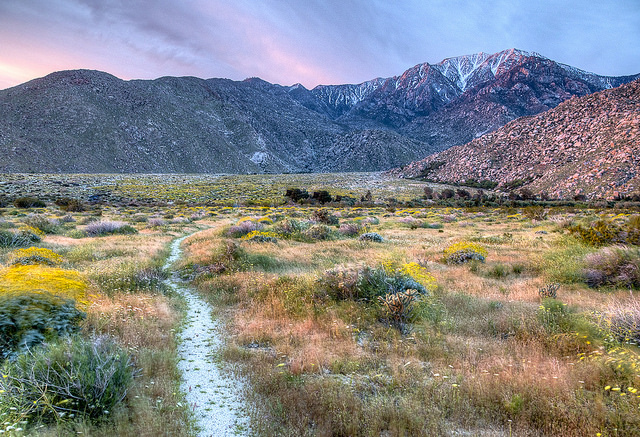
Outdoor Recreation
Hiking – Explore over 280+ miles of designated trails ranging from short interpretive walks to challenging mountain routes.
Scenic Drives – Travel the 62-mile long Palms to Pines Scenic Byway along portions of Highway 74 and 243 through dramatic changes in elevation and vegetation.
Wildlife Viewing – Watch for Peninsular bighorn sheep, birds, reptiles and other desert and mountain wildlife. The monument supports more than 240 bird species and 12 threatened or endangered wildlife species.
Photography – Capture desert vistas, palm oases, mountain peaks, wildflowers and changing landscapes.
Horseback Riding – Equestrian recreation is available on designated trails and routes.
Camping – Developed campgrounds and backcountry camping opportunities are available in portions of the monument, with rules varying by managing agency and location.
Picnicking – Developed picnic areas provide opportunities to stop and enjoy the scenery.
Bird Watching – The monument's wide range of elevations and habitats makes it an excellent destination for birders.
Wilderness Exploration – Portions of the monument include designated wilderness areas for visitors seeking a more remote experience.
Trails & Scenic Experiences
Ed Hastey Garden Trail – An approximately 0.2-mile accessible loop at the Visitor Center featuring native Colorado Desert plants and wildlife. Leashed dogs are permitted on this specific trail.
Randall Henderson Trail – An approximately 2.4-mile loop beginning near the Visitor Center, offering a manageable introduction to the desert foothills. An interpretive guide is available for this trail at the Visitor Center.
Art Smith Trail – A more challenging, exposed desert mountain trail with expansive views and little shade. Bring plenty of water and prepare for steep terrain.
Palms to Pines Scenic Byway – A roughly 62-mile scenic drive along Highway 74 connecting the Coachella Valley with the higher-elevation mountain communities.
Coachella Valley Vista Point – A popular stop for broad views across the Coachella Valley; including the Salton Sea and San Andreas Fault Line.
Cahuilla Tewanet Vista Point – Site has some interpretive panels about Cahuilla culture and history along a paved walkway that takes visitors to a board walk platform looking out to the majestic Santa Rosa Mountains. There is also a short 0.2-mile Wilderness loop trail that can be walked to take in some of the stunning views of the steep canyons below.
Visitor Center
The Santa Rosa & San Jacinto Mountains National Monument Visitor Center serves as an ideal starting point for exploring the monument. Staff can provide information about trails, road conditions, recreation areas and current conditions, while exhibits and displays introduce visitors to the region's ecology, geology and cultural history.
Visitors can also explore the native-plant garden, enjoy a picnic beneath the palms, browse the gift shop and take a stroll on the accessible Ed Hastey Garden Trail. The visitor center provides restrooms, drinking water and visitor information.
Cultural & Natural Highlights
Cahuilla Cultural Heritage – Explore a landscape that has been part of Cahuilla life for thousands of years.
Petroglyphs & Archaeological Sites – The monument protects hundreds of sacred American Indian petroglyphs and archaeological and cultural sites.
Palm Oases – Discover native California fan palms and desert springs tucked into otherwise rugged terrain.
Desert-to-Alpine Ecosystems – Experience striking changes in vegetation and climate as elevation increases.
Peninsular Bighorn Sheep Habitat – The mountains provide important habitat for this iconic desert species.
Visitor Information
Visitor Center Hours: Hours vary seasonally. Current listings show Friday-Sunday, 8:30 a.m.-4 p.m.; visitors should confirm hours before traveling by checking the website for current hours of operation at Santa Rosa and San Jacinto Mountains National Monument | Bureau of Land Management.
Admission: Generally free for access to the National Monument; individual campgrounds or nearby attractions may charge separate fees.
Dogs: Restrictions vary by trail and management area. Dogs are prohibited on many lower-elevation trails to help protect Peninsular bighorn sheep; check current regulations before bringing a pet.
Weather: Temperatures can change dramatically with elevation. Carry plenty of water and dress in layers.
Cell Service: Can be limited or unavailable in remote areas.
Visitor Tip: Stop at the Visitor Center before heading into the mountains, especially if you plan to hike. Conditions, trail access and regulations can vary throughout the monument.