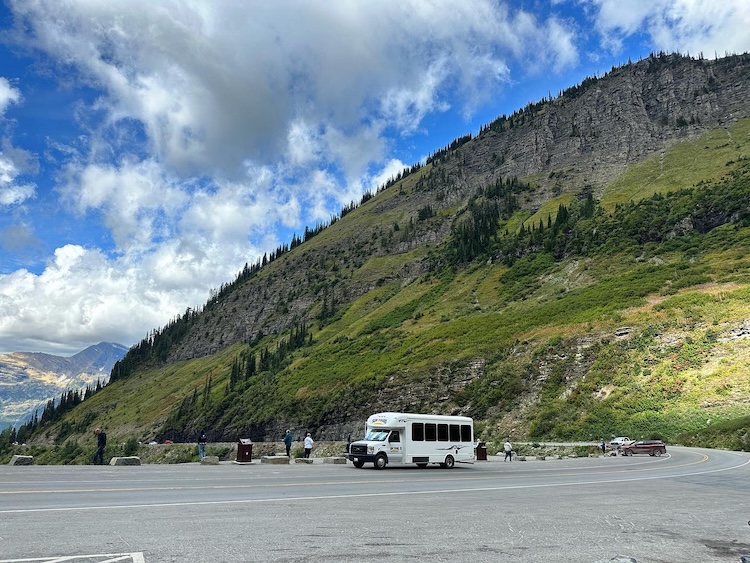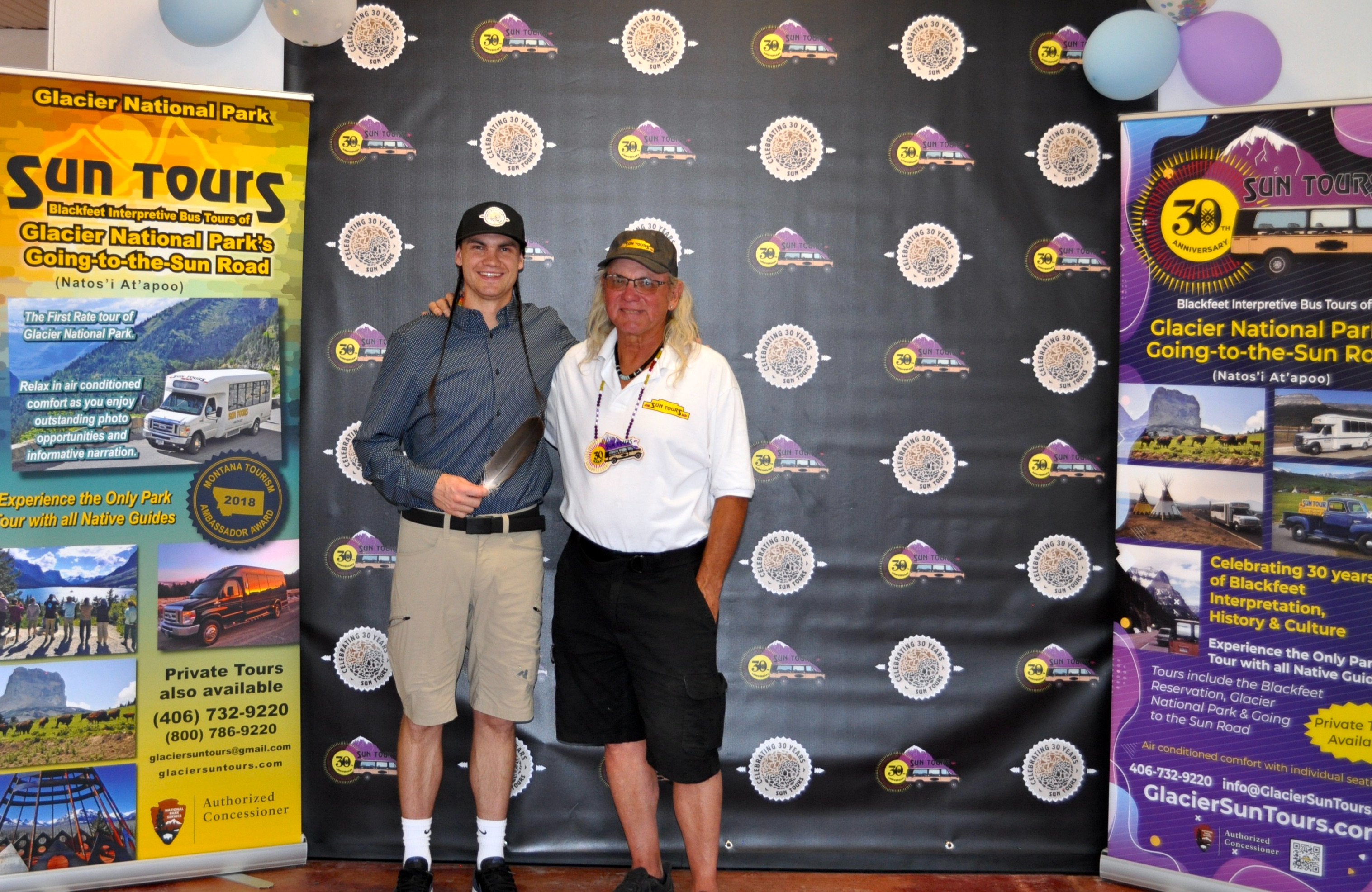

Along the eastern edge of the northern Rocky Mountains, where the prairie meets the peaks, Sun Tours offers something increasingly rare in modern travel: not merely a passage through scenery, but an entry into living memory. Based in the small town of East Glacier Park, located on the Blackfeet Reservation, Sun Tours provides cultural sightseeing tours rooted in culture and connection. As an authorized concessioner within Glacier National Park, Sun Tours centers its work on the deep history and enduring culture of a landscape the Blackfeet call the “Backbone of the World.”
Founded in 1992, Sun Tours grew from Ed DesRosier’s effort to partner with the park and restore a vital dimension of interpretation: the Blackfeet presence in their ancestral homeland. At the time, that perspective was largely absent from visitor narratives. The result is a touring experience that moves beyond scenic appreciation into cultural understanding. Routes trace the legendary Going-to-the-Sun Road, climbing from open grasslands into alpine passes, but it is the viewpoint—grounded, lived, and Indigenous—that defines the journey.
Guides, many of them lifelong residents of the reservation, interpret the terrain through Blackfeet history, spirituality and ecological knowledge. Their storytelling is layered and precise: accounts of the buffalo economy and seasonal migration, the uses of native plants for food and medicine and the complex, often contested history of the park itself. Landscape becomes text—read through memory, language and lived experience.
Visitors learn to recognize animal species and the rhythms that shape their movement across the land. They encounter common plants and roots not as field-guide entries, but as sources of nourishment, healing and tradition. Equally present are the stories, philosophies, and spiritual frameworks of the Blackfeet People—elements that transform a scenic drive into a deeper engagement with place.
ABOUT OUR TOURS
Sun Tours offers a range of experiences, from half-day excursions to full-day and fully customized itineraries. Each is designed not simply to show the land, but to situate travelers within it—inviting a slower, more attentive way of seeing that lingers long after the road descends from the mountains.
ST. MARY VISITOR CENTER (East)
Spend a half-day exploring the eastern approach to Logan Pass via the iconic and breathtaking Going to the Sun Road. Tour includes several 10-15min scenic stops and a longer stop at the Visitor Center on top of the continental divide.
HALF-DAY TOUR(West)*
NEW FOR 2026! The pickup location will be located at the Quarter Circle Parking lot, which will be your first left after you pass through the west entrance (before you get to the 3 way stop). Please look for the sign along the road after passing through the entrance station.
Spend a half-day exploring the western approach to Logan Pass via the iconic and breathtaking Going to the Sun Road. Tour includes several 10-15min scenic stops and a longer stop at the Visitor Center on top of the continental divide.
FULL-DAY TOUR (East Side)
Spend a day on our most popular tour that covers the broad and scenic country of the Blackfeet Reservation and the stunning vistas of Going to the Sun Road. Choose from two pick up locations: Glacier Park Lodge or Glacier Peaks Hotel. Includes a 1 hour lunch stop (cost is on your own) in the little community of St. Mary after exiting the National Park, and continues back to the original starting point by 3-4pm.
PRIVATE TOUR INFORMATION
Sun Tours is thrilled to offer private custom tours through Glacier National Park and Blackfeet Country.
If you are interested in a private tour for your group, family, or business, please click the link below and complete the form. All our private tours are completely customizable and personalized to your liking. Not sure what you would like to see and do? That’s ok, once confirmed, we can walk you through recommendations, stops and highlights that are best suited for your group. Our guides are extremely knowledgeable, personable, and flexible from start to finish and we would love to accommodate you.
TRIBAL RECREATION PERMIT
If you are considering or planning to recreate outside of Glacier National Park on the Blackfeet Reservation, you must purchase a Tribal Recreation Permit. Click HERE to purchase, and if you’d like additional information from Blackfeet Fish & Wildlife, click HERE.