

Along the northern shore of the Salton Sea, the Torres Martinez Desert Cahuilla Indians remain deeply connected to the desert landscape that has sustained their people for generations. The federally recognized Tribe brings together two Desert Cahuilla communities, the Torres and Martinez, whose homelands include palm-filled oases, agricultural lands and the surrounding Coachella Valley.
The Tribe was federally recognized in 1891, but its history in the region reaches back thousands of years. In their own language, members refer to themselves as Mau-Wal-Mah Su-Kutt Menyil, a name associated with the palms and the deer moon, reflecting the close relationship between Cahuilla people, the natural environment and seasonal cycles.
Visitors traveling through the area can still find traces of the community's earlier history. A schoolhouse and teacher's cottage built in 1907 remain near the Tribal offices. The school provided a local place for children to learn rather than making the roughly eight-mile journey to the schoolhouse in Thermal, offering a glimpse into the community's history and the efforts families made to build institutions close to home.
The surrounding landscape remains an important part of Tribal life. Date palm agriculture is prominent on Torres Martinez lands, with numerous Medjool date orchards growing in the desert climate. The palms are more than an agricultural resource — they are part of a broader cultural landscape shaped by generations of Cahuilla knowledge, stewardship and adaptation to the desert.
CULTURE & LANGUAGE
The Torres Martinez Desert Cahuilla Indians are actively working to strengthen and pass on Cahuilla cultural traditions.
Cahuilla language revitalization – Community programs help preserve and teach the Cahuilla language for future generations.
Bird Singing – Traditional songs and cultural teachings are used to maintain connections to Cahuilla history, language and identity.
Traditional knowledge – Cultural practices continue to emphasize relationships among people, the desert, plants, animals and water.
Cultural education – Tribal efforts help younger generations maintain knowledge and traditions that have been passed down through their community.
LANDSCAPE & AGRICULTURE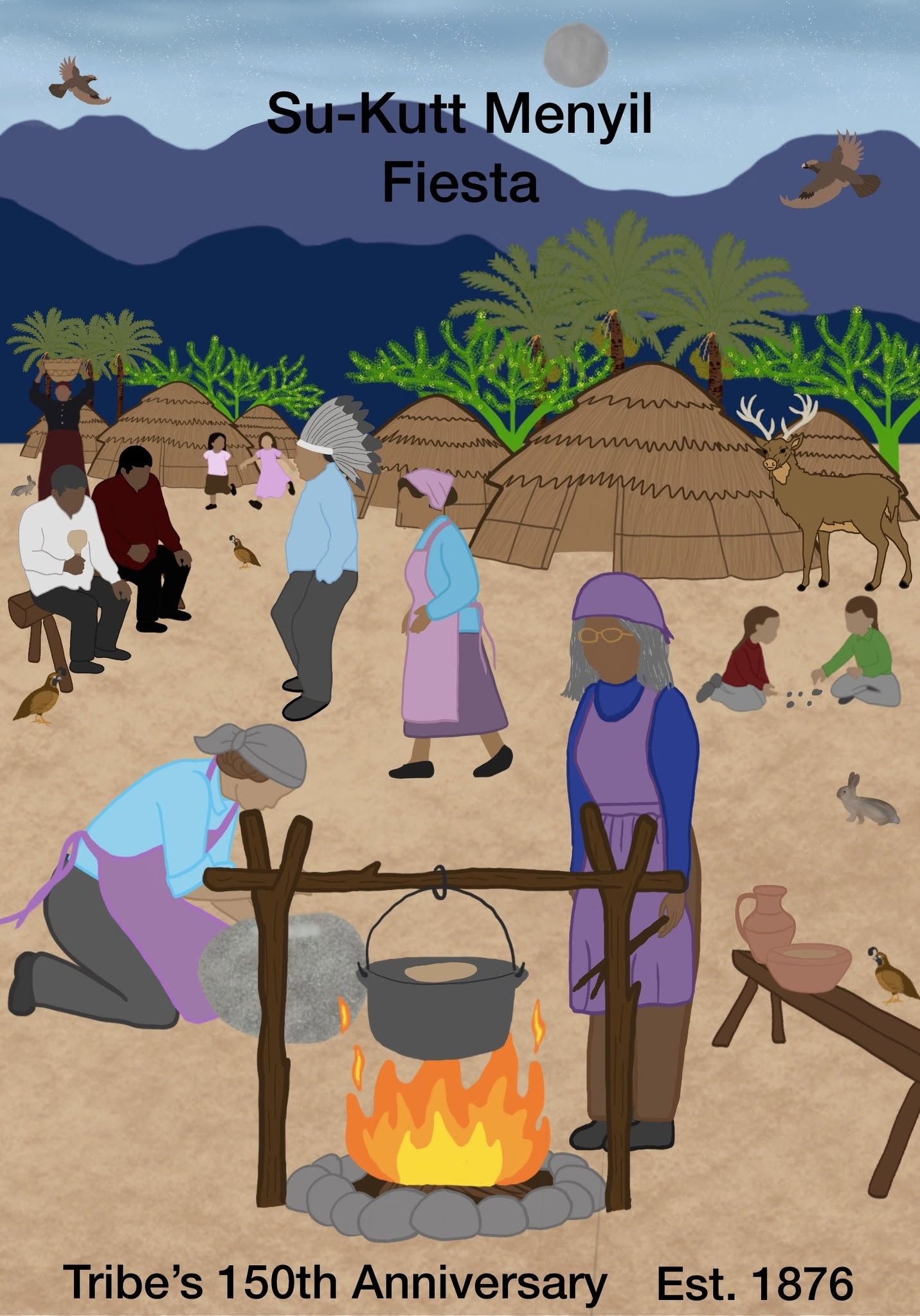
The Tribe's lands sit within the distinctive desert environment surrounding the Salton Sea and northern Coachella Valley.
Medjool date orchards – Date palms are an important agricultural feature of the community.
Desert landscape – Visitors will encounter palm groves, agricultural fields, dry desert terrain and expansive views toward the Salton Sea.
Cahuilla homeland – The landscape reflects generations of Indigenous stewardship and cultural connection.
Salton Sea region – The Tribe's location provides access to one of Southern California's most unusual desert environments and an important area for migratory birds and wildlife.
WHAT VISITORS SHOULD KNOW
The Torres Martinez Desert Cahuilla Indians are a sovereign Tribal nation, and the community continues to govern its own lands, preserve its culture and develop economic opportunities for future generations. While Tribal lands and government facilities are not necessarily public attractions, travelers passing through the region can learn about the Tribe through publicly accessible cultural programs, nearby attractions and community enterprises when available.
Visitors should respect Tribal property, cultural sites and community spaces and should not enter restricted areas without permission. When cultural events or public programs are offered, travelers have an opportunity to learn directly from the community and experience Cahuilla traditions in a respectful setting.
For travelers exploring the Salton Sea and Coachella Valley, the Torres Martinez Desert Cahuilla Indians offer an important reminder that this desert is not simply a scenic backdrop. It is a living homeland, where Cahuilla language, traditions, agriculture and community continue to shape the landscape today.